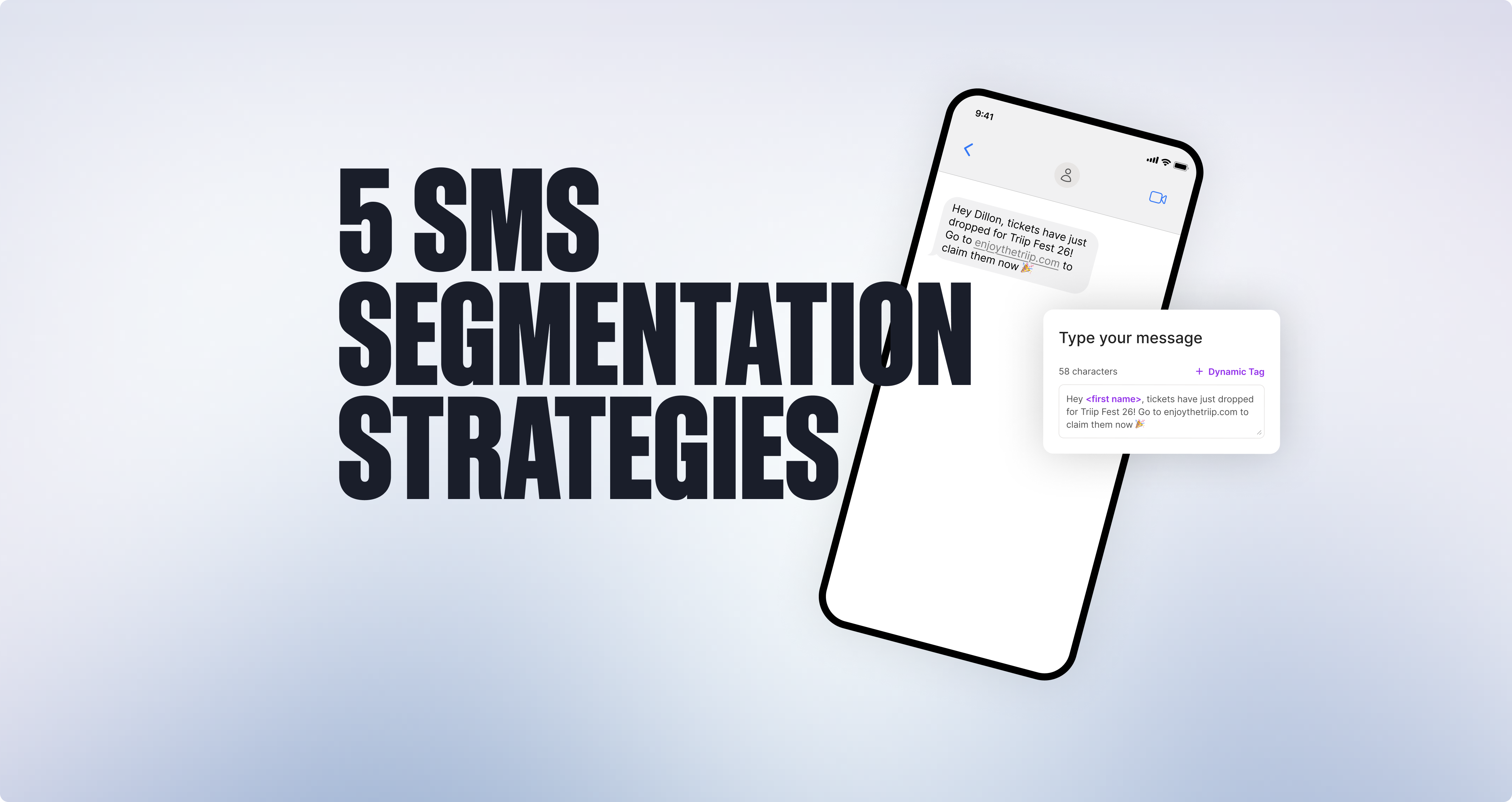
When you blast your entire SMS list with every show announcement, you're texting thousands of people, most of whom have zero interest. Your indie rock fan gets a country show offer. Your weeknight subscriber gets a Saturday promotion. They ignore it, or they opt out.
When you segment based on ticketing and engagement data, you're only texting people who've demonstrated specific behaviours that indicate interest. The results aren't even close.
The most effective segments are all based on demonstrated behaviour, not demographics or guesses.
You're not targeting "women aged 25-34 in the city." You're targeting "people who bought jazz tickets in the past 12 months." That's the shift from demographic guessing to behavioural precision, and it changes everything.
When you segment by past purchase behaviour, you're targeting people who've already proven they'll buy what you're selling. A venue that regularly books stand-up comedy could target attendees from the past three months, rather than their entire SMS list — that person is far more likely to buy a ticket to the next comedy show than a random subscriber who's never shown interest in the genre. You're not hoping they might be interested, you know they are.
This is the kind of targeting that's only possible when your ticketing, email, and SMS data live in one place. Audience Republic is built on that principle: every fan profile combines ticketing history, email engagement, and SMS activity, so segmentation is based on real purchase and engagement data rather than assumptions.
If someone bought jazz tickets three months ago, they're significantly more likely to buy your next jazz show. This is your highest-intent segment because they've already proven they'll buy what you're selling.
The play: When you announce a new jazz show, text everyone who's bought jazz tickets in the past 6-12 months. "Loved [Previous Artist]? [New Artist] is here next month - presale starts tomorrow: [link]"
In Audience Republic, this segment builds itself automatically from ticketing data already flowing into the platform, so you can launch the campaign in minutes rather than pulling lists manually.
These people raised their hand and said "I'm interested in this specific show." They literally asked for this information, which makes the relevance perfect. Because they've already expressed intent, timing matters more than persuasion here — a well-timed SMS removes friction rather than creating demand.
The play: Text them the moment presale access opens or tickets become available. "Your presale access is live - grab tickets before the public on-sale: [link]"
Audience Republic's presale and waitlist tools capture this intent at the point of signup, so the SMS trigger fires automatically the moment access opens.
High-intent leads who didn't convert. They were interested enough to sign up for early access, but something stopped them from buying, whether that was price, timing, or simple hesitation. A short window of urgency is often what closes the gap.
The play: 48-72 hours after presale opens, send an SMS with urgency. "Only 40 seats left for [Show] - don't miss out: [link]" You're giving them the nudge they needed.
Because Audience Republic tracks presale signups against actual purchases in real time, this segment updates itself, so you're always messaging the right group without cross-referencing spreadsheets.
They know about the show and engaged with your marketing, but didn't convert. That's not a lost sale, it's a fan who's already partway there. An SMS follow-up reaches them in a different context at a different moment, which is often enough to finish what the email started.
The play: If someone clicked your email about a show on Monday but didn't buy, text them Wednesday with scarcity or urgency. "Only 35 seats left for [Show] this Saturday - grab yours: [link]"
This is where having email and SMS on one platform pays off. Audience Republic tracks email opens and clicks alongside SMS and ticketing activity, so you can move a fan from one channel to the other without losing the thread of what they've already seen.
Two weeks before a show, target everyone who hasn't purchased but has shown interest - they signed up for presale, clicked on emails, or attended similar shows. Stacking these signals together gives you a segment that's both larger than any single behaviour and still highly qualified.
The play: "Show is in 2 weeks and running low on seats - last chance to grab tickets: [link]" The timing creates natural urgency.
Audience Republic lets you combine these signals - presale signups, email clicks, and past attendance - into a single automated trigger, so this segment runs on its own as the show date approaches.
Here's what this looks like in practice: A venue sends a broad SMS about a folk show to their entire 10,000-person list. They might get a 2% conversion rate - 200 ticket sales. But 9,800 people just got an irrelevant message, and some of them opt out.
Same venue sends a targeted SMS about a folk show to 1,200 people who've bought folk tickets in the past or clicked on folk shows. Because every recipient has already shown interest in folk music, conversion rates are typically much higher than a broad SMS campaign.
You send to far fewer people but generate comparable or better revenue. Plus, you're not annoying the other 8,800 people with irrelevant messages, which means they stay on your list for future shows they want.
The challenge is this segmentation is only possible if your SMS platform is connected to your ticketing data.
Without that connection, you're flying blind. You know Sarah is on your SMS list, but you don't know which shows she's bought tickets to, which emails she's clicked on, or which genres she cares about. You're back to blasting everyone and hoping for the best.
This is the gap Audience Republic was built to close. Because ticketing, email, and SMS all live on one platform, you can see:
That behavioural data becomes the foundation for every SMS you send. You're not guessing who might be interested, you know who is.
When you segment this way, you send to fewer people but generate more ticket sales, and you protect your list by only texting people about shows they've demonstrated they care about.
Your jazz fans get jazz texts. Your comedy fans get comedy texts. Your Friday night regulars get Friday night texts. Nobody gets everything, which means the messages people do receive feel relevant instead of intrusive.
That precision is what separates valuable SMS from spam. And it's what turns SMS from a broadcast channel into a ticket sales driver.
The venues and promoters using Audience Republic tell us the same thing: once you can target based on real behaviour instead of guessing, you can't go back. The results are too different.
Ultimately, the goal isn't to send more SMS campaigns. It's to send fewer, more relevant messages that build trust, increase conversions, and keep subscribers engaged over the long term.
See it on your own data. Book a demo with Audience Republic and we'll show you what segmented SMS looks like for your next show.