You need to move 3,000 tickets before Friday, and HubSpot wants to help you manage your lead pipeline.
That's the problem in one sentence.
HubSpot is a good CRM, user-friendly, affordable, and built to connect marketing, sales, and service in one place. For B2B companies selling software or services, it's a solid choice. But the moment you try to use it to sell tickets, every one of those advantages disappears.
Because HubSpot was built for a fundamentally different business than yours.
HubSpot organizes contacts around lead scoring, deal pipelines, and sales stages. A ticket purchase comes in as a lead. They are qualified. They move through a sales process. Eventually they convert or they don't.
Your fans aren't in a sales process. They're individuals with purchase history. You need to know which shows they've bought tickets for, which genres they follow, which price points they prefer, when they buy (pre-sale or last-minute).
HubSpot can technically store that information, in custom fields, in notes, in workflows you build yourself. But here's what that actually means in practice: a custom integration project with your ticketing platform. Budget $5,000 to $20,000 to build it. Then budget ongoing maintenance, because every time platform updates, the integration breaks.
This is what catches people off guard. They budget for HubSpot. They budget for onboarding. What they don't budget for is the cost of building and maintaining a bridge between the system that sells their tickets and the CRM that's supposed to manage their fans. That cost arrives after they've already committed.
For a platform genuinely built for live events, the ticketing integration isn't a separate project. It's native. The ticket sale is the starting point, not an afterthought.
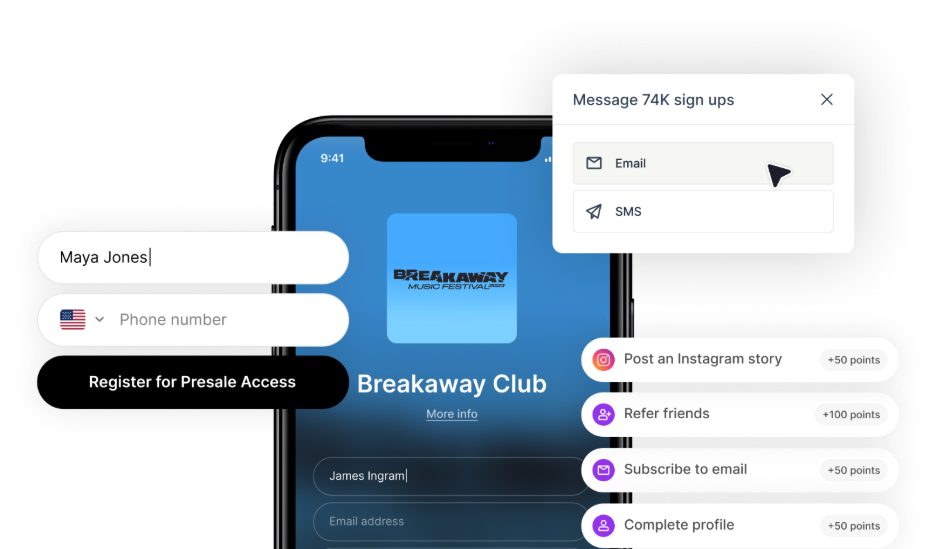
When a campaign ends, HubSpot tells you: emails sent, opens, clicks, contacts updated.
What it doesn't tell you: how many tickets sold, and which email or SMS actually sold them.
That gap is more expensive than it looks.
Without real attribution, you're making every decision about your next campaign based on guesswork. You send five emails across a four-week on-sale window. The show is sold out. You assume the campaign worked. But you don't know which email moved the most tickets, the early bird announcement, the mid-run urgency push, or the last-chance reminder. You don't know whether it was an email or SMS that drove your buyers. You don't know if your highest-open-rate segment was actually your worst converter. You just know the show sold, and you'll run a similar campaign next time and hope it works again.
That's not a marketing strategy. That's matching incomplete data.
The problem runs deeper when a show doesn't sell. HubSpot can tell you the campaign had strong engagement metrics. It cannot tell you that engagement had almost no relationship to ticket purchases, that the fans who clicked your emails were casual browsers, and your actual buyers came from a single SMS you sent to a tightly targeted segment three days before the show. Without that visibility, you optimize the wrong thing. You chase opens and clicks because that's what the platform shows you, not because opens and clicks are what sell tickets.
A platform built for live events closes to that loop. Every ticket sale connects back to the campaign that drove it. The attribution is native because the ticketing data is native. When you run five emails across an on-sale window, you see exactly which one drove the most purchases, which segment converted, and which fans bought the same day versus came back later. You're not hoping your campaign worked. You know whether it did, and you know why.
That's what lets you get better with every show, not just more experienced, but smarter, with data that compounds across your entire calendar.
The problems HubSpot creates for live events aren't fixed by more add-ons or a steeper learning curve. They're structural. The only real solution is a platform designed around how events actually work.
1. Ticketing integrations built in. Not something you hire a developer to build and maintain. Your ticketing platform is where the money is made. It should be the foundation of your CRM, not tacked through custom code and workarounds.
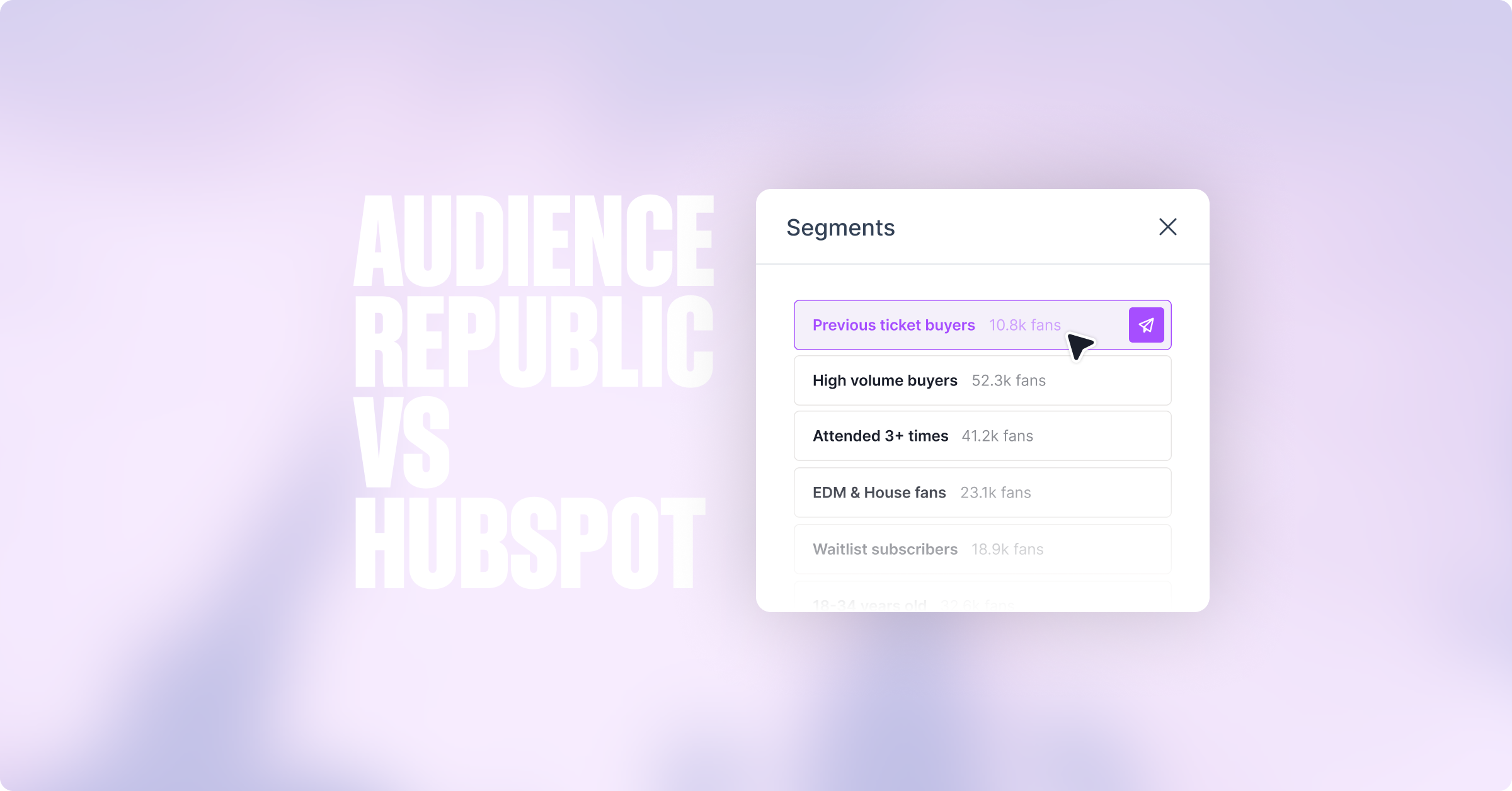
2. Segmentation based on what fans actually bought. Not lead scores. Not pipeline stages. Segment by purchase history, attendance, genre preference, price point, and the things that predict who will buy your next show. And it should be as simple as clicking a filter, not building a custom workflow.
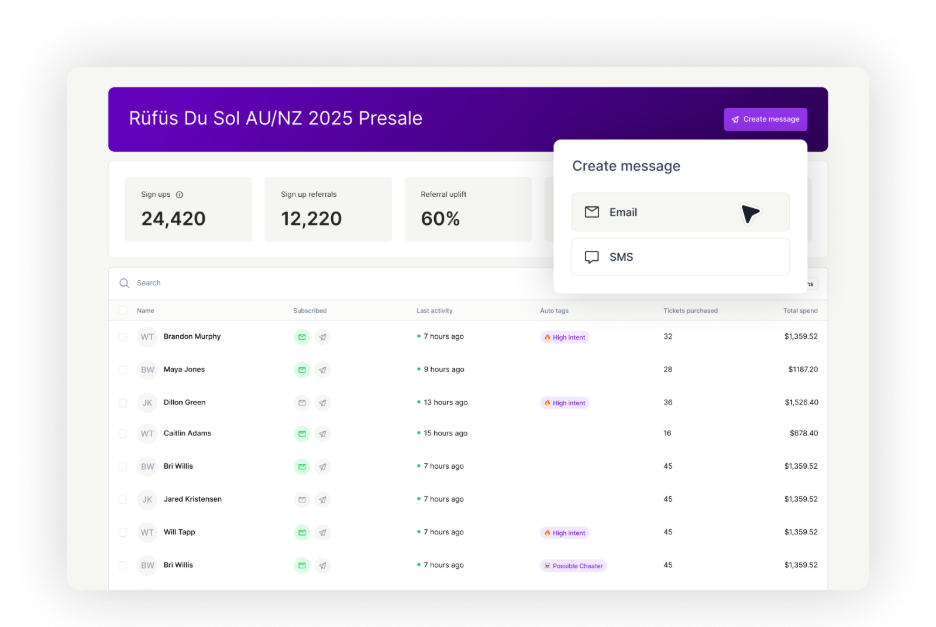
3. Attribution that shows ticket sales. Not activity reports. When a campaign ends, you see exactly how many tickets it sold and which fans bought. You don't build a custom dashboard. The system shows you automatically.
When that foundation is right, your job changes entirely. A show goes on sale; you target the fans most likely to buy based on their history. The campaign ends; you see exactly how many tickets it drove. You're not maintaining integrations or reverse engineering reports. You're managing your audience.
That's the feedback loop live events marketing is supposed to have. And it only exists when the platform was built for it from the start.
A venue running 40 shows a year doesn't have a B2B sales funnel. A festival promoter with a 12-week window isn't running a sales team. A promoter trying to move 3,000 tickets before Friday doesn't need better lead scoring.
HubSpot is a good CRM. It's just not your CRM.
Audience Republic is built for exactly this, fan data structured around purchase history, ticketing integrated natively, campaigns measured in tickets sold
See how easy it is to build SMS and email campaigns that drive real ticket sales. [Get started]