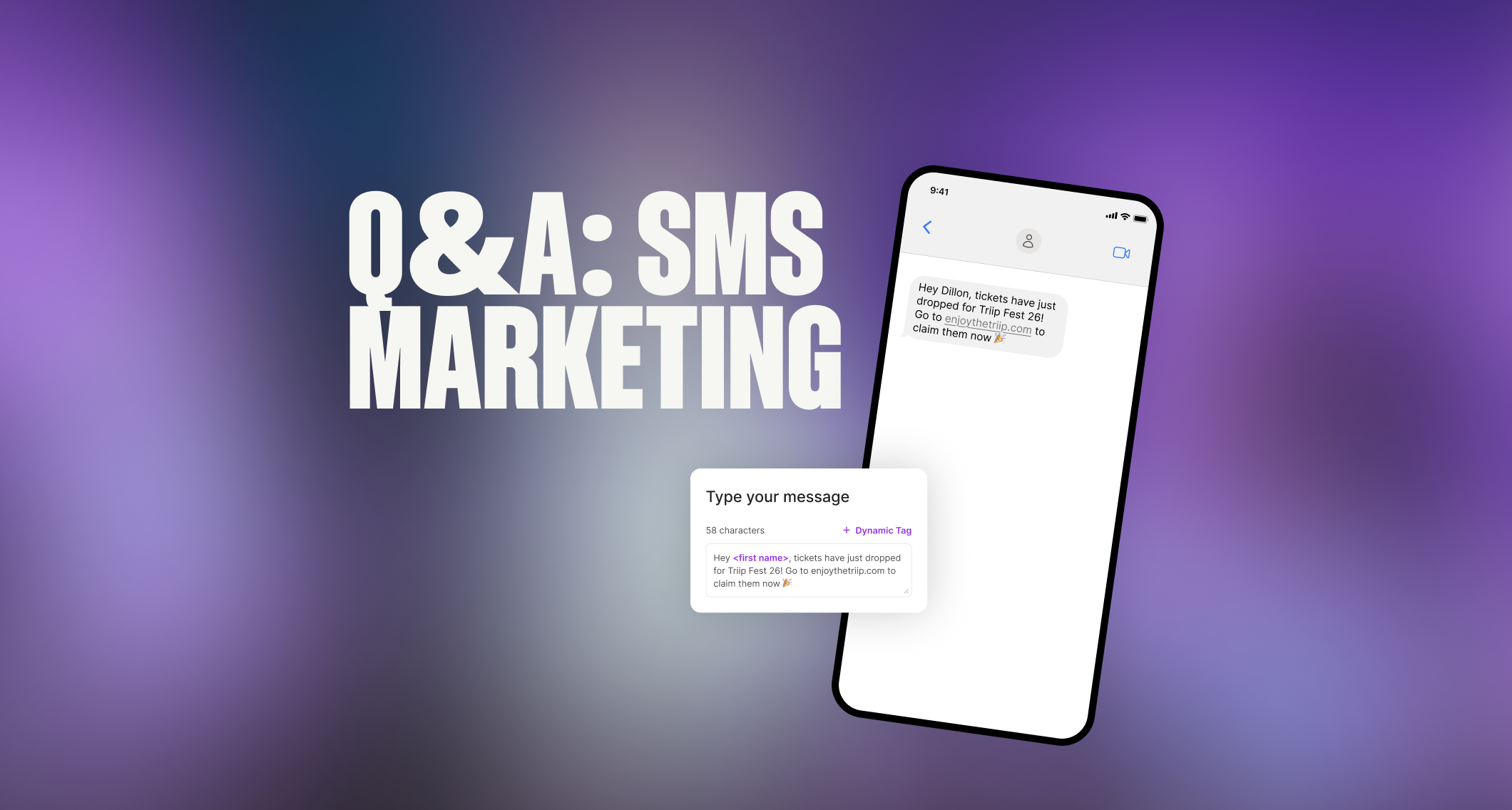
SMS became a revenue driver once venues connected it directly to ticketing data. That shifted SMS from a broadcast channel into a measurable conversion channel. Our data shows that 57% of ticket purchases attributed to SMS happen within the first hour of receiving the message, so the impact is immediate and directly measurable.
Connecting SMS to ticketing data also unlocks real targeting. Instead of blasting the entire list, venues can segment by purchase behavior and intent. They can suppress "buy now" messages after someone purchases and move that person into a different journey instead. These strategies should only be used with contacts who have explicitly opted in to receive SMS. Email engagement or a previous ticket purchase alone does not constitute SMS consent.
The other driver is urgency. Fans who buy via SMS typically complete their purchase within about 36 minutes of receiving a message — compared to hours for email. That's roughly 6x faster, which matters most for presales, on-sales, low-inventory alerts, and last-minute pushes, where the window to act is short.
When SMS is done right, fans want the messages because they're genuinely useful. But SMS is both high attention and high interruption, which makes relevance non-negotiable.
That's why connecting SMS to ticketing is critical. It lets you target based on real behavior. If someone hasn't purchased, the call to action is to buy tickets. If they've already purchased, the message shouldn't stop — it should change to upgrades and upsells, event info, or reminders that reduce no-shows and improve the onsite experience. Same channel, different objective, driven by ticketing-based targeting.
SMS isn't just faster than email. It's less forgiving. Because attention is higher, targeting has to be perfect. Connecting SMS to ticketing data is how you get there.
The decision framework comes down to three things: relevance, timeliness, and usefulness. If any one of those is missing, it probably shouldn't be an SMS.
Relevance means the message is targeted for that person — it's about a show they care about, at a venue they attend, and aligned with their past behavior or engagement. Timeliness means there's a genuine reason to send it right now: SMS works when the window to act is short and delaying reduces its value. Usefulness means the message serves a clear purpose — helping them buy a ticket, upgrade their experience, or get critical information at the right moment.
Email is better when one or more of those conditions isn't met. If the message needs explanation, storytelling, multiple links, or is "nice to know" rather than "act now," use email. Email builds awareness, context and intent.
That's why SMS demands better targeting. When you connect SMS to ticketing data, you can be precise about who receives what message and when. That precision is what separates a valuable SMS from an annoyance to unsubscribe from.
We count attribution when someone was sent a message, clicked, and then purchased within a given attribution window. Once you connect your ticketing platform to your SMS platform, you can see the complete journey — Sarah received an SMS at 2pm, clicked at 2:15pm, and bought two tickets for $120 at 2:18pm. That sale gets attributed to that SMS campaign.
The reality is most SMS platforms only track clicks — they can't track the sale. You send an SMS, someone clicks through and buys tickets, and that's where the story ends. Your SMS platform has no idea a purchase happened. Your ticketing system processed the sale but has no idea which SMS drove it.
The reason is most ticketing platforms don't pass transaction data back to SMS platforms. Without that, it's impossible to know how many people converted and how much revenue you generated. You're stuck with clicks and guessing the impact on ticket sales.
When SMS and ticketing are connected, you know which campaigns drive ticket sales and which segments convert best — so you can do more of what works. Tuesday's SMS to past comedy attendees generated $8,400. Wednesday's broad blast to the full list generated $1,200. The gap isn't luck — it's the difference between texting people who'd already shown they liked comedy and texting everyone.
SMS plays different roles depending on where someone is in their journey.
Before the event, SMS drives conversion during high-urgency moments — presales, on-sale day, the 48 hours before a show when you need to move the last seats, or the final call before a price increase. The key is targeting people who've shown intent but haven't bought — they opened your email, clicked through, or bought similar tickets last season.
During the event, SMS shifts from marketing to service. "Doors open at 7pm, here's your mobile ticket." "Show starts in 15 minutes." This improves the experience — and opens the door to incremental revenue onsite, like upgrades and merch.
After the event is the most underutilized phase. The smart play is using post-event SMS to drive the next purchase. "Loved last night's show? Get early access to similar events — text YES to join our presale list." You're striking while the experience is fresh. Someone who just had a great night is significantly more likely to engage within 48 hours than three weeks later.
Start with opted-in SMS subscribers who demonstrated intent but didn’t purchase a ticket.
Here's the playbook: Take everyone who opened your email about an upcoming show in the next two weeks but didn't purchase. Wait 48-72 hours after the email send. By this point, the initial email has likely been forgotten, making SMS an effective way to re-engage someone who already showed intent without feeling repetitive. Then send an SMS: "Only [X] seats left for [Show Name] this [Day] — grab yours before we sell out: [link]."
This works because you're targeting people who've already demonstrated interest — they opened the email, they know about the show. You're adding new information — scarcity — that creates urgency they didn't have initially. And you're reaching them in a different context that increases the likelihood they'll act.
It's easy to measure. You can see exactly how many people from that SMS converted and how much revenue it generated. If you send to 500 people and convert 50 at an average ticket price of $40, you just generated $2,000 in revenue you can directly attribute to that single SMS.
Once you prove that works, expand to other high-intent segments: people who bought similar tickets last season, people who clicked through but didn't purchase, people who attended a similar show three months ago.
Within your opted-in SMS audience, the most effective segments are based on demonstrated behavior, not demographics or guesses. Here are the segments that consistently drive the highest results:
Purchased tickets to previous events — If someone bought jazz tickets three months ago, they're significantly more likely to buy your next jazz show. You're targeting people who've already proven they'll buy what you're selling.
Signed up for presale or waitlist — These people raised their hand and said "I'm interested." Texting them when presale opens or tickets become available works because the relevance is perfect — they literally asked for this.
Signed up for presale but didn't purchase — High-intent leads who didn't convert. An SMS 48-72 hours later with urgency — "Only 40 seats left" — gives them the nudge they needed.
Opened or clicked email but didn't purchase — They know about the show and engaged with your marketing, but didn't convert. An SMS follow-up with scarcity or urgency reaches them in a different context at a different moment.
14 days before event, hasn't purchased, but signed up for presale or clicked emails — Time-based trigger combined with behavior. "Show is in 2 weeks and running low on seats" works because the timing creates natural urgency.
These segments work because they're based on real behavior, not assumptions. You're not guessing someone might like jazz — you know they bought jazz tickets. That precision is what separates valuable SMS from spam.
When you segment this way, you send fewer messages and generate more revenue. Just as importantly, you protect your list by only texting fans about shows they've already shown an interest in.
Here's the scenario: You're a theater venue. You send an email Monday about a performance in two weeks. Sarah opens the email, clicks through to the ticketing page, looks at seats, but doesn't complete the purchase. Maybe she got distracted, maybe she wanted to check her calendar. The moment passed.
In a traditional setup, you have no idea this happened. Your email platform tells you Sarah opened and clicked, but you have no idea she didn't buy. So you do nothing, and Sarah forgets about the show.
With connected attribution, you can see Sarah's exact behavior: opened Monday at 2pm, clicked through, viewed tickets, no purchase. Now you can act.
By Wednesday, the email has faded from her inbox, but the show hasn't left her mind — that's the window where a nudge with new information lands best, and where it still feels like a reminder rather than a repeat ask. So Wednesday morning — 48 hours later — you send Sarah an SMS: "Only 35 seats left for [Show Name] this Saturday. Grab yours before we sell out: [link]"
This works because Sarah already knows about the show and showed genuine interest. You're providing new information she didn't have Monday — scarcity. You're reaching her in a different context — not her email inbox at work, but her phone directly.
The biggest mistake is either sending too many messages or not enough — and both stem from the same root problem: not connecting SMS to ticketing data.
Venues that send too many are blasting their entire list with every show. Jazz show to everyone, including people who hate jazz. Then rock. Then comedy. By the end of the week, people are opting out because they're getting bombarded with irrelevant offers. They're treating SMS like email — high volume, low targeting.
Venues that don't send enough are being overly cautious because they know SMS is intrusive and they're scared of burning their list. So they only use it for reminders or absolute last-minute desperation messages. They're leaving massive revenue on the table because they don't trust themselves to be relevant.
Both problems get solved the same way: connect your SMS platform to your ticketing data so you can segment by real behavior. Now you can send more messages to the right people without annoying everyone else. Your jazz fans get jazz texts. Your comedy fans get comedy texts. Nobody gets everything.
It's onsite marketing for upgrades and merch.
Most venues go silent once someone buys a ticket. They'll send a reminder the day before the show, maybe a "doors open" text, and that's it. But once fans are onsite and immersed in the experience, they're far more open to receiving messages, because those messages are more timely, relevant, and useful in the moment. Many venues are too conservative here. If fans have opted in, you've earned the right to communicate with them — and depending on how sharp your targeting is, you might be able to send up to 2-3 messages on the show day.
The opportunity is using SMS during the event for incremental revenue — upgrades onsite to better seats, buying merch they can pick up later in the evening, or even purchasing tickets to the next show while in the moment. Urgency and purchase intent are both higher onsite. Someone sitting in the back who realizes they want a better view is ready to act right now, not three days ago when they were browsing online.